 Yoga Podclass
Active Surrender: Strength and Softness at the Same Time
You're facing a significant change..job uncertainty, relationship shifts, plans falling apart and you feel two impossible pulls at once. One part of you wants to grip harder, control more, force the outcome you want. The other part wants to throw your hands up and say "I guess this is just how it is now." You're caught between those two extremes, not recognizing that surrender means neither. It means working fully while staying open to what actually emerges.
In This Article
- •What active surrender actually means — showing up fully with the present moment while letting go of attachment to outcomes
- •How balancing effort and softness reveals this pattern — poses that require both strength and ease simultaneously
- •Where you either grip or collapse — places in life where you either control everything or give up entirely, missing the middle ground
- •Language for connecting practice to life — exact phrases for bridging physical surrender to off-mat acceptance
Introduction
Surrender, Ishvara Pranidhana in yoga philosophy is commonly misunderstood as passivity, as giving up, as inaction. But active surrender is one of the most powerful and demanding practices. It means showing up and working fully with the present moment while simultaneously letting go of attachment to needing things to turn out a specific way. It's strength and softness at the same time.
When you work with this concept, you start to notice where you're gripping—controlling outcomes, forcing results, white-knuckling your way through situations because you can't tolerate uncertainty. You also notice where you're collapsing—giving up too easily, not putting in effort, using "acceptance" as an excuse to avoid showing up. True surrender is neither. It's the palm tree in a hurricane: strong enough to be rooted, flexible enough to bend, responsive enough to move with the storm rather than break against it.
This isn't about stopping effort or abandoning your goals. It's not about becoming passive or refusing to work toward what matters to you. Active surrender means you put in full effort while releasing the death grip on needing things to turn out exactly as you imagined. You work with integrity, you make adjustments, you show up completely—and you also trust that some things are beyond your control. That balance—effort without force, action without attachment—is where real change happens.
On the Mat
This pattern shows up clearly in sequences that demand both strength and softness simultaneously. In Warrior II, you can press firmly down through your back foot while softening your shoulders—strength and ease coexisting. In Reverse Warrior with a self-assist where you draw your elbow toward the back of the mat, you're working the shoulder with active flexion while also inviting length and softness through your side body.
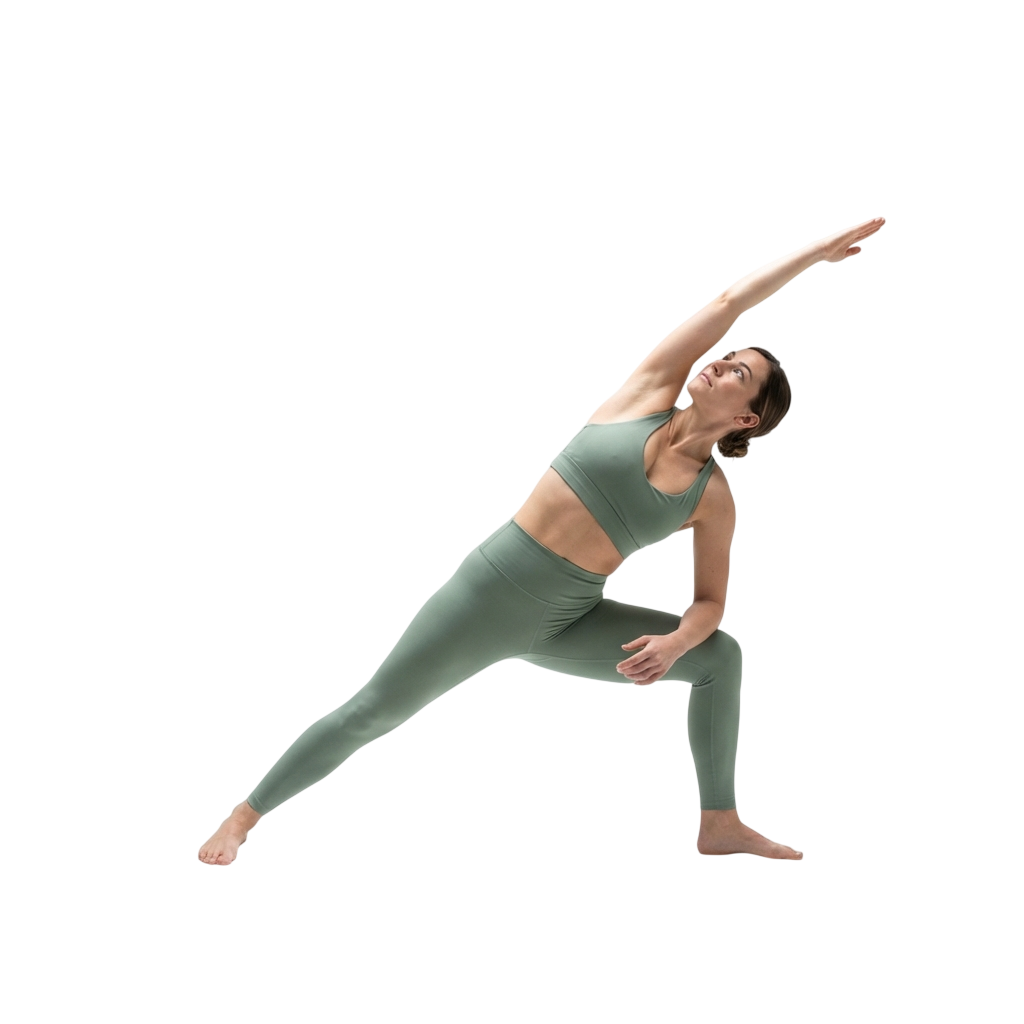
You might notice in Extended Side Angle that you can press your legs together with intensity while also breathing fully, maintaining length through both side bodies. The effort and the ease aren't contradictory—they're partners. In Bound Locust or Forebow, you're lifting, strengthening, engaging your whole body, but if you grip your jaw, tense your face, force the expression, you've crossed from effort into force. The pose works better when you maintain integrity without needing to prove anything.
Working with surrender means noticing when effort becomes force. In Standing Half Moon, you press down firmly through both feet AND soften your shoulders. In Eagle Arms flowing with Star Pose and Horse Pose, you're wrapping your arms with intention while also breathing, softening, finding ease with each exhale. You're not white-knuckling the pose or collapsing into it. You're meeting it with full presence while staying open to what emerges moment to moment.
Use language that invites both effort and ease, never framing them as opposites. Instead of "engage more" or "relax more," try "engage with integrity while staying soft" or "work fully while letting go of how it should look."
Key cueing language: "Strength and softness at the same time." "Work with full presence while releasing attachment to the outcome." "Find the effort, then invite the ease." "Notice where you're gripping, where you're forcing. Can you soften even in exertion?" "Press down firmly, but soften your jaw, soften your shoulders."
Use the palm tree metaphor: it survives the storm not because it's rigid, but because it knows how to bend. Strong enough to be rooted, flexible enough to move with what comes. This gives students a somatic image for active surrender rather than abstract philosophy.
Students often default to one extreme—either gripping and forcing (especially in "advanced" poses) or collapsing and giving up (in harder holds). Cue them to find the middle path. Watch for jaw clenching, breath holding, face tension—signs they've crossed from effort to force. Also watch for lack of engagement, shallow breath, collapsing alignment—signs they've given up. Both need recalibration.

Off the Mat
The same pattern that shows up when you're gripping in Bound Locust or collapsing in Extended Side Angle appears everywhere you're either controlling everything or giving up entirely.
At work: You're facing uncertainty—a business pivot, a job change, market shifts beyond your control. You respond by either gripping harder, trying to control every variable, force outcomes that may not be possible. You overwork, over-plan, over-manage, exhausting yourself trying to prevent the uncertain. Or you give up entirely, stop investing effort, assume it's already lost. True surrender means you work with full integrity—making smart decisions, putting in genuine effort, positioning yourself well—while also accepting that some outcomes aren't yours to control. You adjust as needed without needing things to turn out exactly as you planned.
In relationships: Someone you care about is changing, moving away, or growing in a different direction. You either try to control the relationship—make them stay, convince them to change, grip the dynamic you're used to—or you give up and distance yourself entirely. Surrender means you show up fully, you're honest about what you need, you work toward connection—and you also accept that relationships evolve, that you can't control another person, that some connections transform. You don't collapse into the change or fight it with everything you have. You meet it with presence.
With goals and ambitions: You have a vision for what you want to create—a business, a body, a lifestyle. You either grip it with obsession, force it into being through sheer willpower, sacrifice everything else in service of the vision, or you abandon it because it's not happening fast enough. Surrender means you work consistently, make smart choices, show up with full effort—and you also stay flexible about how it unfolds. You adjust the plan without losing the vision. You push when it's time to push, soften when it's time to ease. You're not attached to the specific timeline or method.
During loss and change: Life delivers unexpected shifts—job loss, health issues, relationship endings, death. You either resist with everything you have, trying to undo what's happened, or you collapse into victimhood, assume you're powerless. Active surrender means you grieve what you've lost while also showing up to build what comes next. You don't have to like the change or stop working toward what you want. You just acknowledge what is and work from there rather than exhausting yourself fighting reality.
In rest and recovery: You push through exhaustion because you can't accept needing rest, gripping productivity even as your body fails. Or you collapse entirely and stop trying, using fatigue as an excuse to disengage from everything. Surrender means you honor what your body is actually asking for while maintaining effort in areas that matter. You rest when you're depleted, you work when you're resourced. You're responsive rather than rigid or collapsed.
This pattern persists because surrender seems like weakness—giving in, admitting defeat, accepting less than you want. But the people who burn out are the ones gripping, forcing, controlling. The people who give up are the ones who have given all their power away. The people who thrive are the ones who work fully while staying open to what emerges. They adjust without collapsing. They persist without force. They hold their vision lightly instead of white-knuckling it.
Choose 1-2 scenarios that match your students' actual lives. If you're teaching to ambitious professionals, the work and goals examples will resonate. If you're teaching to people navigating life transitions, the loss and change example will land. Specificity helps students recognize their own patterns of gripping versus collapsing.
Introduce off-mat material during transitional moments—moving into Savasana setup, during figure-four stretches, in the wind-down when students are integrating. These are moments when they're settled enough to reflect without needing to act immediately.
Keep it descriptive rather than prescriptive. You're not telling them to surrender or change their approach. You're naming the pattern and offering the concept. Some will recognize themselves immediately in the gripping. Others will recognize themselves in the collapsing. Still others won't see it until they're in the thick of it.
Making the Connection
Connecting your experience on the mat to your life off the mat.
""In Bound Locust, in Forebow, in Eagle Arms flowing with Star and Horse—you're working fully, engaging completely, putting in real effort. But if you grip your jaw, if you tense your face, if you force the pose, it stops being effort and becomes force. That's when the pose breaks down. Off the mat, it's the same. You can work toward what you want, make the right decisions, show up with integrity—and you can do all of that without white-knuckling the outcome. Without needing it to turn out exactly as you imagined. Surrender isn't giving up. It's working fully while letting go of attachment to needing things to turn out a certain way. It's the difference between effort and force. One is sustainable, generative, strong. The other exhausts you. The palm tree survives the hurricane not because it's rigid, but because it's strong enough to be rooted and flexible enough to bend.""
""Notice in these big poses how strength and softness coexist. You press your feet down firmly and soften your shoulders at the same time. You engage your legs with intensity and breathe fully, inviting ease. Neither one cancels out the other—they actually support each other. Off the mat, surrender looks like that. You don't stop working. You don't give up on what matters. But you also let go of needing to control every outcome, every variable, every response. You show up completely while staying open to what actually emerges. You work with integrity and adjust as needed. Change is going to come whether you like it or not. Surrender means you collaborate with that change rather than resist it or collapse into it. You remain present, responsive, engaged—and you also accept what's beyond your control. That balance—effort without force, action without attachment—that's where real transformation happens.""
Deliver bridge language during moments of stillness within effort—after completing Bound Locust or Forebow, during Savasana setup, when students are integrating. The language lands when paired with the physical experience of working while softening, not when they're actively straining.
State it once, clearly, without over-explaining. The physical practice has already taught them the principle—the language just names what they experienced. Students will carry this with them, especially those who recognize themselves in either pattern (gripping or collapsing). Trust that they'll find the resonance on their own timeline.
One bridge phrase per class is enough. The embodied experience of balancing effort and ease is powerful on its own. The words just help them articulate it and carry it beyond the mat.
Try This
This week, notice one place where you're either gripping (trying to control, force, white-knuckle an outcome) or collapsing (giving up, not putting in effort, using acceptance as avoidance). Just notice the pattern without judgment. Don't try to fix it yet—just recognize which side you're defaulting to.
Once you notice, ask yourself: what would it look like to work with full integrity while also letting go of needing it to turn out a specific way? Not to stop trying, not to give up on what matters—but to work fully without force, to stay engaged without gripping. That middle ground—strength and softness at the same time—is where sustainable change actually happens. It's not easy, which is why the practice exists. But it's possible.
Frame this as observation and recognition, not as a behavior change assignment. "If you're curious this week, notice where you're gripping or collapsing in one area of your life." Most students won't immediately shift from gripping to surrendering or from collapsing to engaging—this is deep work. But the recognition itself shifts something. They'll catch themselves mid-grip or mid-collapse and remember there's another way. That awareness is the first step.
Want to explore active surrender through practice? This concept is woven throughout our latest class episode, where we work with both strength and softness, building foundations while inviting ease. Where are you gripping in your life? Where are you collapsing? What becomes possible when you balance effort with surrender?
Related Episode