 Yoga Podclass
Aparigraha: The Difference Between Holding On and Strangling
You're in pigeon pose, breath shallow, jaw clenched, telling yourself "just breathe through it" while every muscle in your body argues otherwise. You're gripping—not just the pose, but the idea that you should be able to do this pose, that your hips should be more open by now, that flexibility equals progress. Meanwhile, your actual hip isn't releasing because you're too busy forcing it to cooperate.
In This Article
- •What aparigraha reveals about control — the difference between holding something with care and strangling it with expectation
- •How hip openers expose grip patterns — specific poses where your body shows you exactly where you're white-knuckling life
- •Where gripping disguises itself as commitment — work, parenting, and relationships where "holding on" became "holding too tight"
- •Language for loosening without letting go — exact phrases for practicing non-grasping without checking out entirely
Introduction
Aparigraha translates as "non-grasping" or "non-possessiveness"—the fifth yama in yoga philosophy. In plain language, it's the practice of noticing where you're strangling something (a pose, an outcome, a person) and consciously loosening your grip without abandoning it entirely.
This matters because gripping creates rigidity, and rigidity prevents adaptation. When you're white-knuckling your way through a situation—on the mat or off—you can't respond to what's actually happening. You're too busy forcing what you think should happen.
Aparigraha isn't apathy. It's not "I don't care what happens" or spiritual bypassing dressed up as surrender. It's the difference between holding someone's hand because you want to and gripping their wrist because you're terrified they'll leave. One creates connection; the other creates tension.
On the Mat
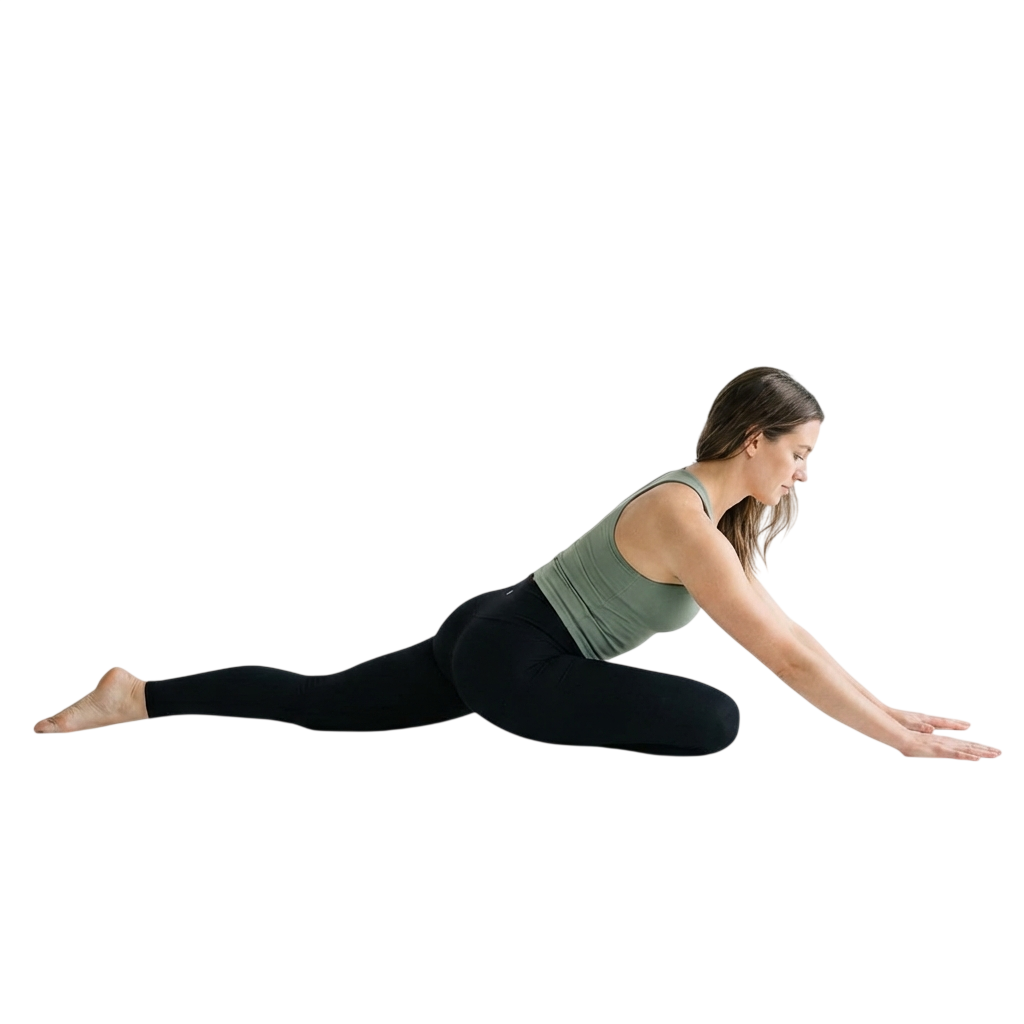
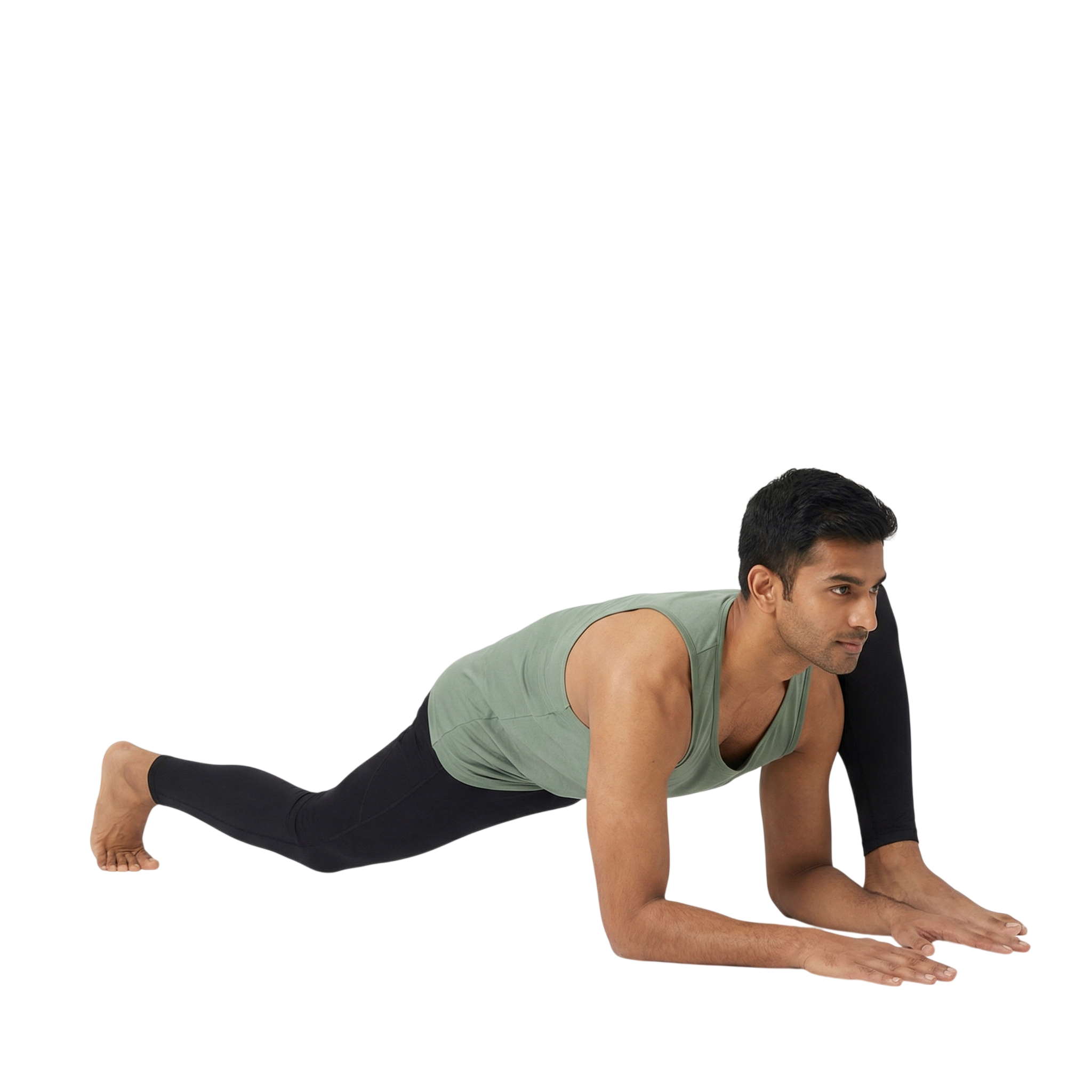
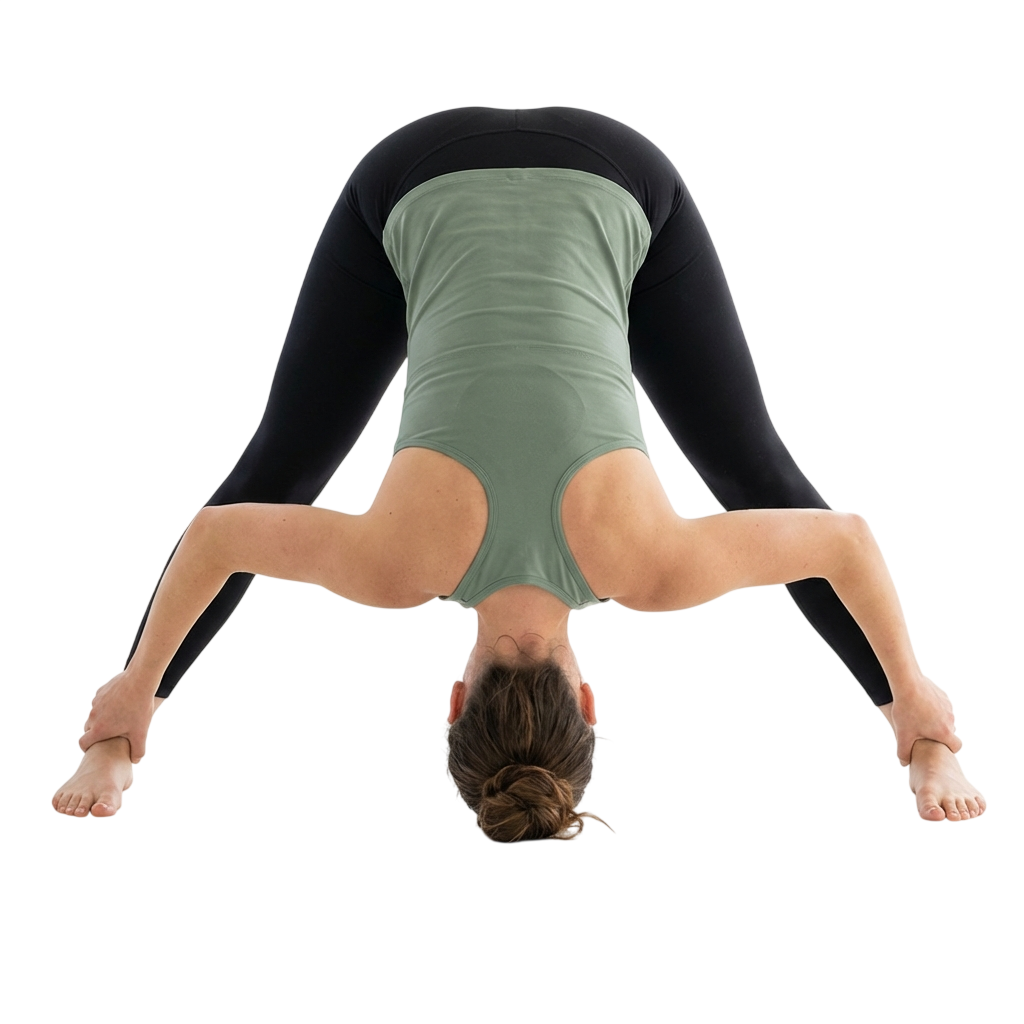
Hip openers—pigeon, lizard, frog, seated figure-four—reveal aparigraha because these poses demand you stay present with discomfort long enough to notice your grip response. Your hips won't open on command, no matter how hard you clench your jaw about it.
In pigeon specifically, the pose asks for release, but most people respond by gripping everywhere else. Your jaw tightens. Your shoulders creep toward your ears. Your hands press into the mat like you're trying to push yourself out of the experience. None of that helps your hip release—it just distributes tension throughout your body.
What to notice: Where does effort show up that has nothing to do with the pose itself? Check your face—are you scowling? Your hands—are they fisted or clawed? Your breath—is it held or choppy? These are all signs you're gripping the experience rather than allowing it. The pose requires your hip to stretch; it doesn't require your entire nervous system to brace for battle.
Working with it: When you notice gripping, don't try to force relaxation (that's just more gripping). Instead, redirect effort where it's actually useful. In pigeon, that might mean actively flexing your front foot to protect your knee while consciously softening your jaw. You're not eliminating all effort—you're placing effort where it serves and releasing it where it doesn't.
Use hip openers with longer holds (pigeon, lizard, seated figure-four, reclined cow-face) because these poses trigger the grip response reliably. Students can't muscle their way to more flexibility, which makes the grip pattern obvious. Pair with gentle twists (supine or seated) where students can practice maintaining integrity without bracing.
Key cueing language:
- "Notice where you're working that has nothing to do with this hip opening—soften your jaw, release your shoulders, unclench your hands."
- "Can you keep your front foot active to protect your knee while letting your face completely relax? Effort where it serves, release where it doesn't."
- "If you're gripping harder, you're not going deeper—you're just creating more tension. See if you can hold this shape with 20% less effort everywhere except where the pose actually asks for engagement."
Sequencing/pacing approach: Build toward hip openers gradually rather than dropping students into pigeon cold. Warm the hips with low lunges and gentle twists first. Once in the deeper hip openers, hold for 90 seconds to 2 minutes minimum—long enough that the initial "I can muscle through this" response exhausts itself and students are forced to find a different relationship with sensation. Use props generously (blocks under hips in pigeon, bolster under chest in frog) so students aren't gripping just to stay upright.
Common obstacle + teaching response: Students confuse sensation with emergency. The moment their hip starts talking, they grip everything as if preparing for danger. Clarify: "Sensation isn't the same as harm. If your hip is stretching and your body responds by clenching your jaw, that's habit, not protection. Practice discernment—what actually needs to engage right now?" Also watch for students who collapse entirely to avoid gripping; remind them that aparigraha isn't about eliminating boundaries, it's about not strangling past them.
Off the Mat
The same pattern that shows up when you clench your jaw in pigeon appears everywhere you're confusing commitment with control.
In parenting: You've planned the perfect birthday party—theme, timeline, guest list, backup activities in case kids get bored. Then it rains, half the RSVPs don't show, and your kid decides they hate the theme you spent three weeks coordinating. Instead of adapting, you grip harder: "We're doing the scavenger hunt anyway, I don't care if it's pouring." Your jaw tightens, your shoulders rise, and you're no longer celebrating your kid's birthday—you're defending your plan.
At work: You presented a project direction in the morning meeting. By afternoon, new information shifts the priorities. Instead of pivoting, you spend the rest of the day arguing why the original plan still works, building a case for why everyone else should bend to fit your timeline. You're gripping the outcome so tightly you can't see that the circumstances have changed.
In relationships: You had an idea of how the evening would go—dinner, conversation, connection. Your partner comes home exhausted and just wants quiet. Instead of meeting the moment, you resent the deviation from your expectation. You're gripping how things "should" be so hard that you're missing how things actually are.
With your own progress: You decided you'd be "further along" by now—career, fitness, personal growth, whatever metric you're measuring. Every reminder that you're not where you "should" be triggers the grip response. You push harder, schedule tighter, berate yourself for not being enough. You're strangling your own development because you're too busy forcing it to match your timeline.
In conversations: Someone shares something vulnerable, and instead of just listening, you grip for the perfect response. You're no longer present—you're three steps ahead, planning what to say, how to fix it, whether your advice will land right. You're gripping the outcome of the conversation instead of allowing the conversation itself.
What makes this hard: Loosening your grip feels like you don't care enough. We've been taught that commitment means relentless pursuit, that love means never letting go, that progress requires force. So when you practice aparigraha—holding with care but not control—part of you panics: "If I'm not gripping this tightly, will I lose it entirely?"
How to share examples: Choose one scenario that matches your students' lives. If you teach parents, the birthday party example will land immediately. If you teach professionals, use the work pivot scenario. Don't list all five—pick the one where students will recognize themselves, describe it with enough specificity that it feels real, and then let them extrapolate to their own grip patterns.
When to introduce off-mat material: Offer this after students have experienced the physical grip pattern, ideally during a resting shape or while setting up savasana. The connection between "I was clenching my jaw in pigeon" and "I do this when plans change at work" becomes obvious when students' nervous systems have just practiced the release. Mid-flow, they're not available for this depth.
Keep it invitational: Frame as pattern recognition, not prescription. "If you notice this week where you're gripping an outcome or a plan—where commitment has turned into strangling—see what happens if you loosen your hold by 20%. You don't have to let go completely; just notice the difference between holding with care and holding with control." Don't ask students to share examples or process publicly. This is internal work. What to avoid: suggesting that caring less is the solution, implying that aparigraha means becoming passive, or framing grip as moral failure.
Making the Connection
Connecting your experience on the mat to your life off the mat.
"In pigeon pose today, some of you noticed you were gripping your jaw, your hands, your shoulders—all this effort that had nothing to do with your hip opening. That's the same pattern that shows up when you're white-knuckling an outcome in your life. You think gripping harder will help, but it just creates more tension. The practice is learning to place effort where it actually serves—flexing your foot to protect your knee, yes; clenching your jaw, no. Off the mat, that might look like staying committed to what matters while releasing your stranglehold on exactly how it has to unfold."
"Aparigraha isn't about not caring. It's about the difference between holding someone's hand because you want to and gripping their wrist because you're terrified they'll leave. One creates connection; the other creates tension. When you practice loosening your grip on the mat—softening your jaw in a hip opener without collapsing out of the pose—you're training the same skill you need off the mat: staying present and committed without strangling the outcome."
When to deliver: Offer one bridge phrase during a transition out of a deep hip opener (moving from pigeon to downward dog, or from lizard to child's pose) or while students are settling into a final resting shape. The language lands when the body has just experienced the pattern and is beginning to integrate the release. If you deliver this while students are actively working in a challenging pose, they won't absorb it.
How to deliver: Speak clearly and simply, no performance. State it once, pause briefly, then move on. Don't explain what you just said or repeat it three different ways. Students will connect the dots themselves if the timing is right. Over-explaining dilutes the impact.
Keep it minimal: One bridge phrase per class. More than that becomes a lecture. Choose the phrase that fits the energy of the room—if students seemed to struggle with gripping today, use the first phrase; if the class felt more contemplative, the second phrase about connection versus control will resonate more.
Try This
This week, pick one area where you might be gripping a little too tightly—a project, a relationship, an expectation about your own progress. You're not letting go of it entirely. Instead, practice loosening your hold by 20%.
Pay attention to what happens in your body when you release some control. Does your breath deepen? Do your shoulders drop? Does that familiar tightness in your chest ease slightly? Notice whether loosening your grip actually diminishes your commitment or just reduces the tension you were creating around it.
Frame this as an experiment, not homework: "If you're curious this week, notice one place where you might be gripping a little too tightly, and see what happens when you loosen your hold by 20%." Most students won't actively track this outside class—that's fine. The value is in the invitation itself. Some will immediately recognize their grip pattern and work with it; others will remember this six months from now when they're white-knuckling a situation and suddenly recall "loosening by 20%." You're planting seeds, not requiring compliance. The invitation is the practice.
Where are you confusing commitment with control this week? The difference between holding with care and strangling with expectation might be subtler than you think—and your jaw has been trying to tell you for a while now.