 Yoga Podclass
Beginning Where You Are: On and Off the Mat
You're standing at the front of your mat on January 2nd, already behind on the resolution you set 48 hours ago. You skipped yesterday. You told yourself you'd practice every single day this year, and you've already failed. So now you're here, frustrated, trying to force yourself back to square one like the last two days didn't happen. You're trying to start over instead of simply starting right here.
In This Article
- •What "beginning where you are" actually means — moving forward without erasing who you've been or what you know
- •How to practice beginning where you are on the mat — specific poses and observations that reveal your honest starting point
- •Where you demand clean slates in daily life — relationships, career shifts, health habits, and why starting over isn't always necessary
- •Language for connecting practice to life — exact phrases for bridging physical honesty to off-mat pattern recognition
Introduction
Beginning where you are means moving forward from your current reality—not from where you wish you were, not from where you were last year, and not from some idealized clean slate. It's the practice of honest assessment without the pressure to erase, fix, or dramatically reinvent yourself first.
This matters because most of us waste enormous energy trying to manufacture the "right" conditions before we begin. We wait until we're flexible enough, calm enough, healed enough, or different enough. Beginning where you are short-circuits that delay. It says: this body, this breath, this energy level, these habits you're still working through—this is enough to start.
This is not settling. It's refusing to confuse your starting point with your destination.
On the Mat
Notice your breath quality when you first arrive in a pose. Is it smooth and full, or are you holding, bracing, forcing? Your breath tells you whether you're beginning from where you actually are or from where you think you should be.
Notice the gap between the shape you imagine and the shape you're in. That gap isn't failure—it's information. Notice your self-talk. Are you narrating the pose as "not good enough yet" or simply observing "this is where I am"? One keeps you stuck in judgment. The other lets you move.
Working With It
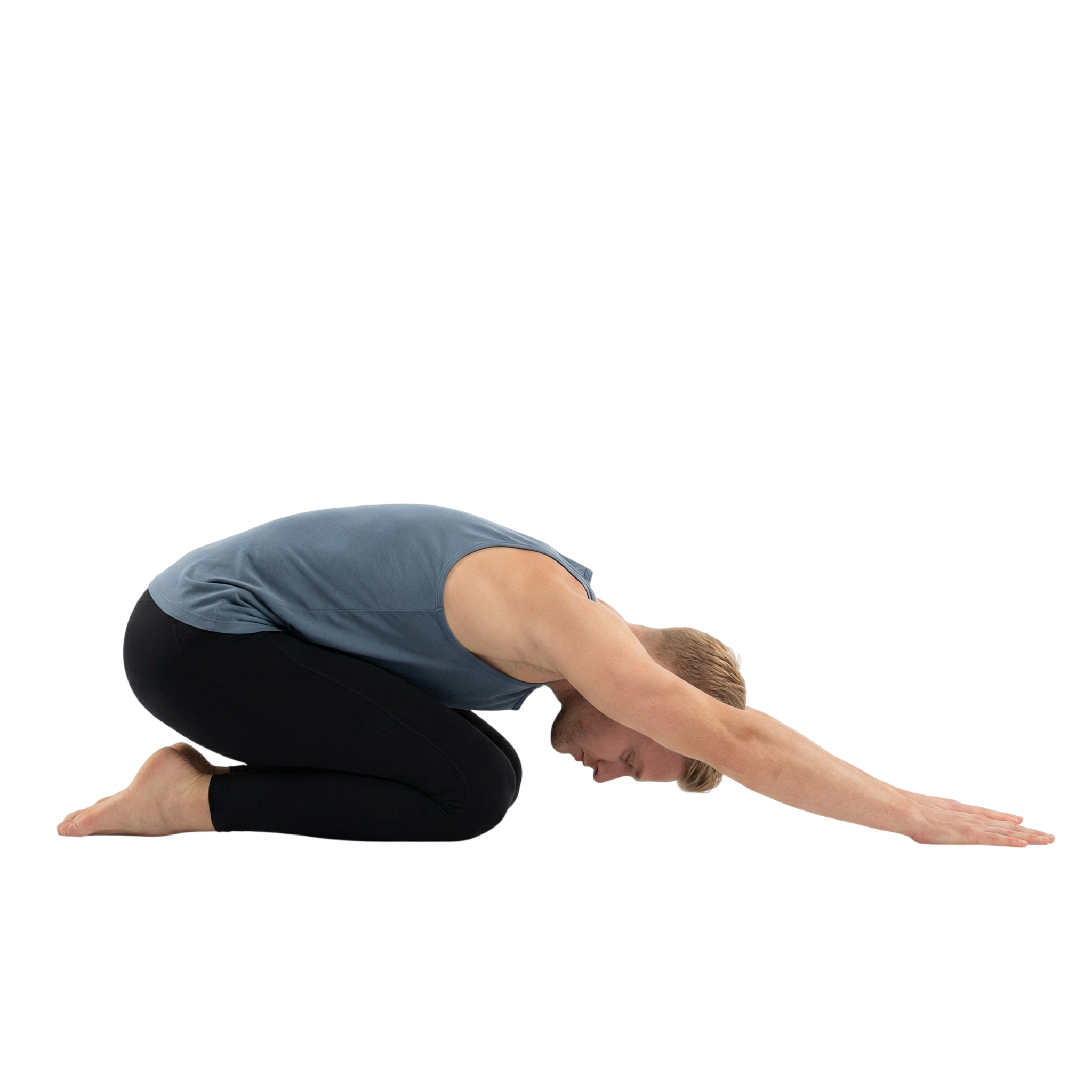
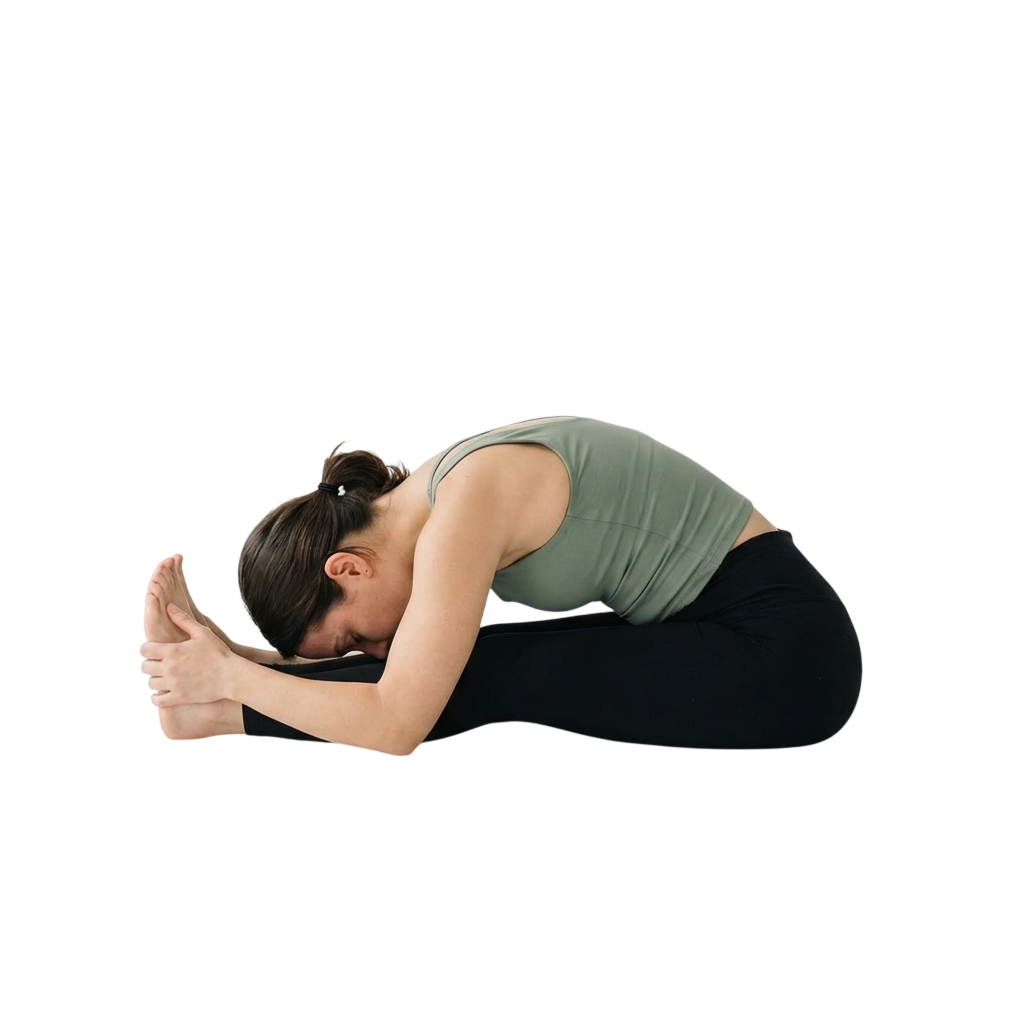
Stay in child's pose longer than feels necessary. Let it be the practice, not the pause before the practice. In forward folds, bend your knees as much as you need to release your lower back. Beginning where you are sometimes means choosing the modification that lets you actually feel the pose rather than the variation that looks more advanced.
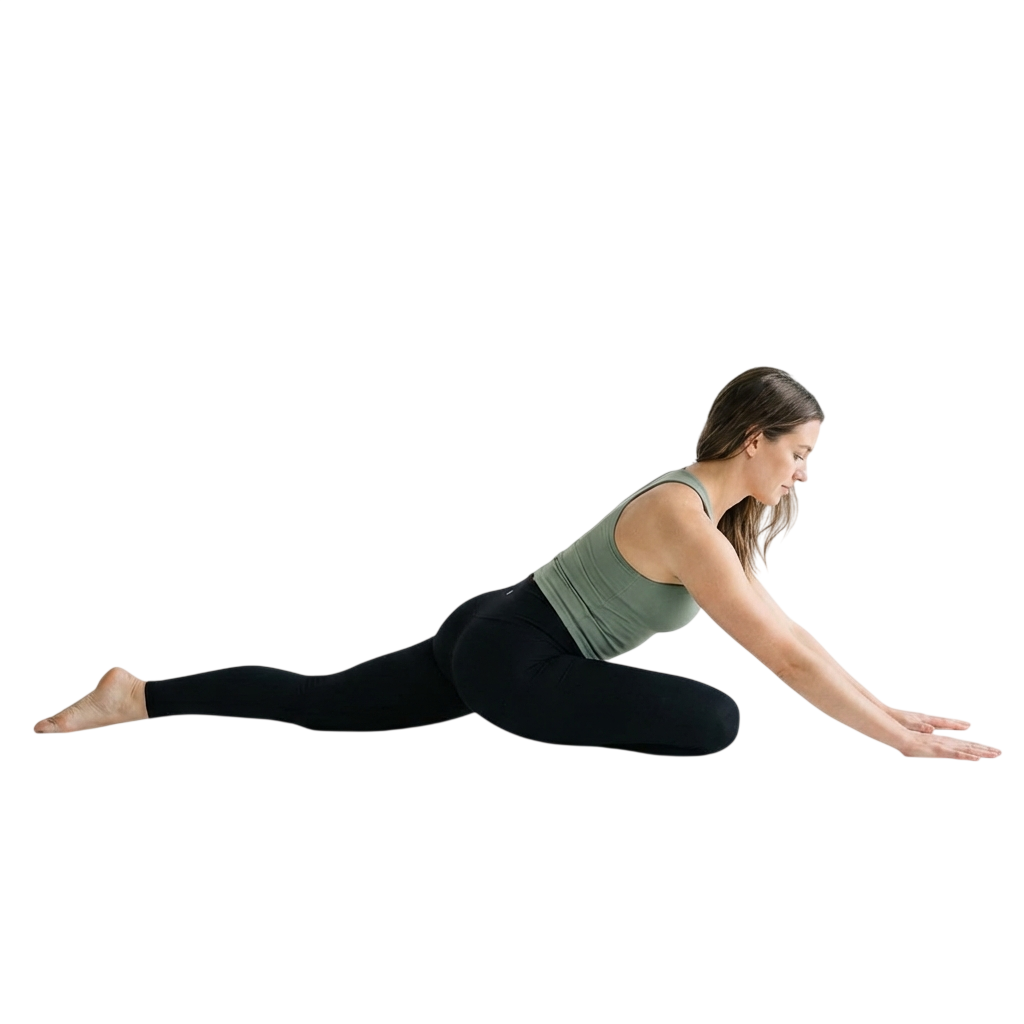
In pigeon, resist the urge to "do more" by folding deeper or pressing harder. The practice here is staying—not moving forward by adding effort, but moving forward by remaining present with what is.
Pose selection & rationale: Child's pose establishes the starting point without hierarchy. Forward folds (standing and seated) provide measurable feedback about range and tension. Pigeon offers both physical intensity and an opportunity to practice non-reactive presence during discomfort.
Key cueing language:
- "Child's pose isn't a warm-up for something better—this is where we actually start."
- "Notice the difference between the effort that supports you and the effort that pushes past yourself."
- "You don't move forward in pigeon by doing more. You move forward by staying."
- "Your hamstrings are telling the truth about where your body is today. Can you listen without fixing?"
Sequencing/pacing approach: Open with extended child's pose (1-2 minutes minimum) to establish patience and presence before any flow. Use forward folds as checkpoints throughout class. Hold pigeon for 90-120 seconds per side to create genuine opportunity for students to practice staying rather than escaping.
Common obstacle + teaching response: Students often treat child's pose as filler time, rushing through to get to "real" poses. Reframe it explicitly: "This isn't the waiting room for your practice—this is your practice." Students may force depth in forward folds or pigeon. Cue sensation over shape: "Find the place where you can breathe fully, then stay there."
Off the Mat
The same pattern that shows up in your morning practice—the one where you skip the honest starting point and jump straight to where you think you should be—plays out everywhere.
In Conversations After Conflict:
You had a fight with your partner last week. Things are tense. You want to fix it, so you try to act like it never happened—forced cheerfulness, skipped acknowledgment, pretending you're both fine. Beginning where you are would sound like: "I'm still processing what happened, and I'd like to talk about it when we're both ready."
After Career Changes:
You left your corporate job and now you're building something new. You tell yourself you have to completely reinvent, that everything you learned before is irrelevant now. Beginning where you are means recognizing you're starting this chapter with years of skills, relationship experience, and professional resilience—not from scratch.
With Self-improvement:
You bought the journal, made it three days, and now it sits unopened. You tell yourself you need to start fresh—new system, new commitment. But you're starting with the knowledge that three-day streaks don't work for you. Beginning where you are means using that information instead of erasing it.
What Makes This Hard
Beginning where you are feels like admitting defeat. We've been taught that progress requires dramatic transformation, that starting points should be erased rather than acknowledged. There's guilt in admitting "I'm not there yet" and fear that honesty about your current state means you'll never move forward. But you can't move forward from a place you refuse to acknowledge.
How to share examples: Choose 1-2 scenarios that match your students' life stage. If you're teaching young professionals, use the career change example. If your students are parents, use the parenting scenario. Specificity makes the concept tangible—students recognize themselves in concrete details.
When to introduce off-mat material: Introduce these connections during pigeon (you have time while they're holding), during savasana setup, or in brief transitions. Don't interrupt physical effort with philosophical commentary—wait for moments when students are receptive.
Keep it invitational: Frame as curiosity, not prescription. "If you notice yourself demanding a clean slate this week, just notice that." You're planting seeds, not assigning homework. Avoid lecturing. Instead: "I've noticed I do this—I wonder if it shows up for you too."
Making the Connection
Connecting your experience on the mat to your life off the mat.
"In child's pose, you don't show up as the most flexible version of yourself—you show up as you are right now. That's the practice. The same is true off the mat. You don't need to become someone else before you begin. You begin as yourself, with the body you have, the energy you brought, the habits you're still working through. Beginning where you are isn't settling for less. It's refusing to delay your life until you're 'ready enough.'"
"In forward folds and pigeon, your body tells you exactly where you are. There's no faking range you don't have. You can either fight that honesty or work with it. Off the mat, the same choice exists. When you're navigating a difficult conversation, a career transition, or a personal setback, you can demand a clean slate and exhaust yourself trying to start from scratch—or you can begin where you are, using everything you've learned, acknowledging what's still hard, and moving forward anyway.""
When to deliver: Use the first bridge phrase during child's pose or right after it. Use the second during pigeon hold or immediately after. Timing matters—language lands when it's paired with lived experience in the body.
How to deliver: Keep your tone simple, clear, conversational. State it once and let it land. Don't repeat, don't over-explain. Students will make their own connections.
Keep it minimal: One bridge phrase per class is enough. More than that and you're lecturing, not teaching.
Try This
This week, notice when you demand a clean slate. Maybe it's after you miss a workout, skip a commitment, or fall back into an old pattern. Notice the moment you tell yourself "I need to start over." Then ask: what if I didn't start over? What if I just started here?
Pay attention to what you're carrying that's actually useful—skills, knowledge, relationships, resilience. You don't have to erase your past to move forward.
Frame it as optional: "If you're curious this week, pay attention to when you tell yourself you need to start over. Just notice it." The invitation itself is valuable—it plants the seed even if students don't act on it immediately.
Want to explore this concept in practice? Listen to Episode 1 of Season 3 (New Beginnings), where David guides a 30-minute beginner-friendly vinyasa flow with a focus on beginning where you are. What patterns are you noticing this week—on the mat or off?