 Yoga Podclass
Strength in Repetition: Little by Little, a Little Becomes a lot
You finish a work task and immediately open Slack before you've even closed your laptop. You plan to meditate every morning, but by day three you've already talked yourself out of it. You decide to reach out to that friend more often, but weeks pass and you still haven't sent the text. You skip the small, repeatable action because it doesn't feel significant enough to matter.
In This Article
- •What strength and repetition actually means — beyond physical endurance, understanding how small, consistent actions build lasting change
- •How to work with repetition on the mat — specific poses and sequencing that reveal patterns through repeated experience
- •Where you skip consistency in daily life — work habits, conversations, and transitions where you abandon the small actions that matter
- •Language for connecting practice to life — exact phrases for bridging physical repetition to off-mat patterns
Introduction
Strength and repetition is about recognizing that transformation doesn't happen through dramatic gestures—it happens through small, consistent actions repeated over time. It's the practice of showing up to the same poses, the same breath patterns, the same uncomfortable moments, and building capacity through that repetition rather than avoiding it.
When you work with this concept, you start to notice where you're waiting for the big moment to create change, and where you're skipping the small, repeatable efforts that actually build foundations. You see the places where you abandon consistency because progress feels too slow, or because the action itself seems too minor to make a difference.
This isn't about perfection or never missing a day. It's not about grinding yourself down through sheer willpower or forcing yourself to maintain routines that don't serve you. It's about understanding that little by little, a little becomes a lot—and that the small actions you can return to consistently are more valuable than the dramatic efforts you can only sustain once.
On the Mat
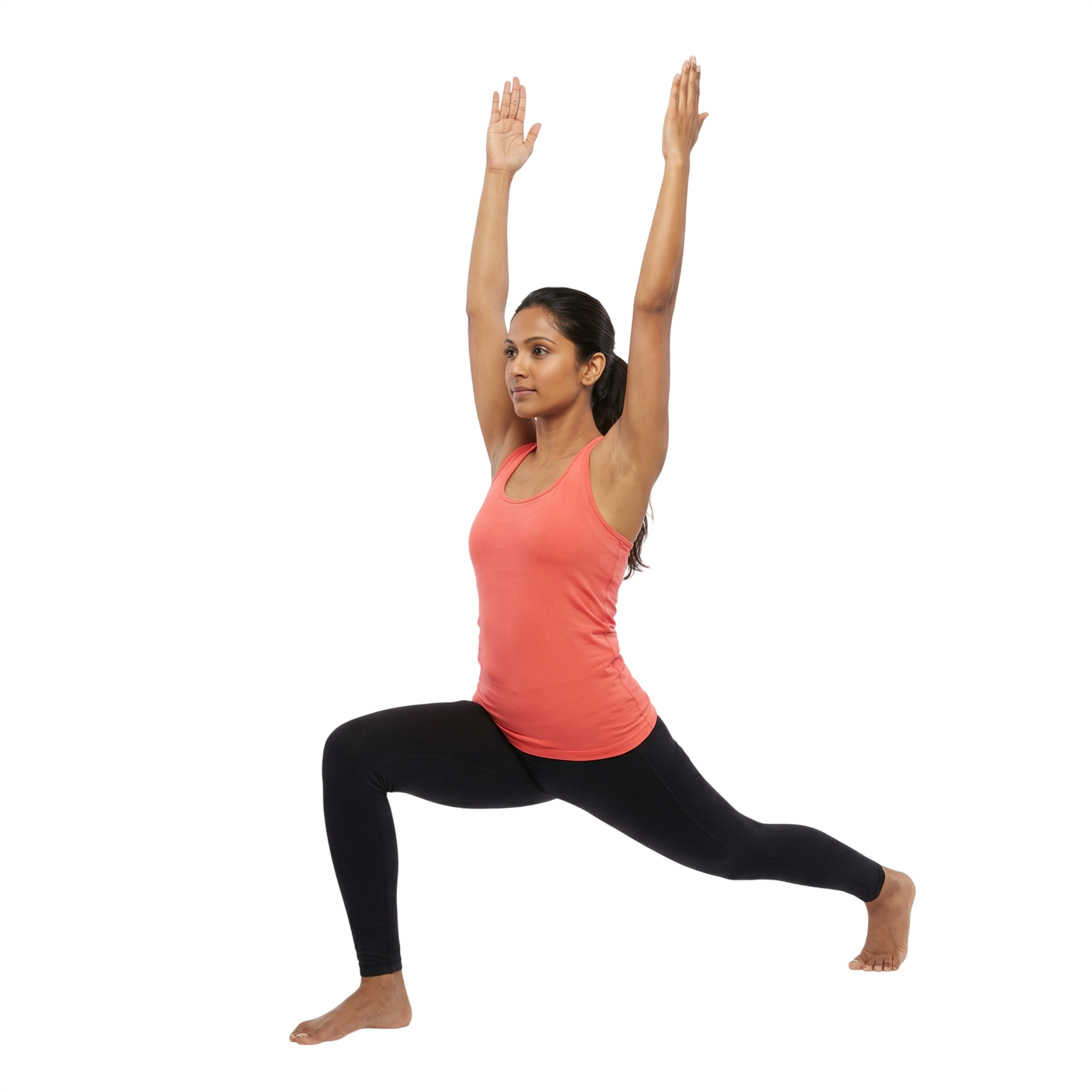
Repetition-based sequencing reveals this pattern immediately. Sun Salutations A and B, practiced multiple times in a single class, show you exactly where you show up differently each time you return to the same shape. The second Crescent Lunge feels different than the first. By the third Chaturanga, you notice where you're compensating or where you've found more ease.
In poses like Crescent Lunge, you might notice your front knee drifting forward or your back heel lifting as you fatigue. Your breath might become shallow by the third round of flow. You might find yourself rushing through transitions you were deliberate about the first time through. These aren't failures—they're information about where your foundation weakens under repeated stress.
Working with repetition means choosing a strong foundation you can return to rather than pushing to your absolute edge. In Crescent Lunge, that might mean backing off 10% from your deepest expression so you can maintain the pose through multiple rounds. In Chaturanga, it might mean taking your knees down on the second or third flow-through so you can keep showing up for the pose rather than collapsing out of it. The strongest foundation is the one you can return to time and time again.
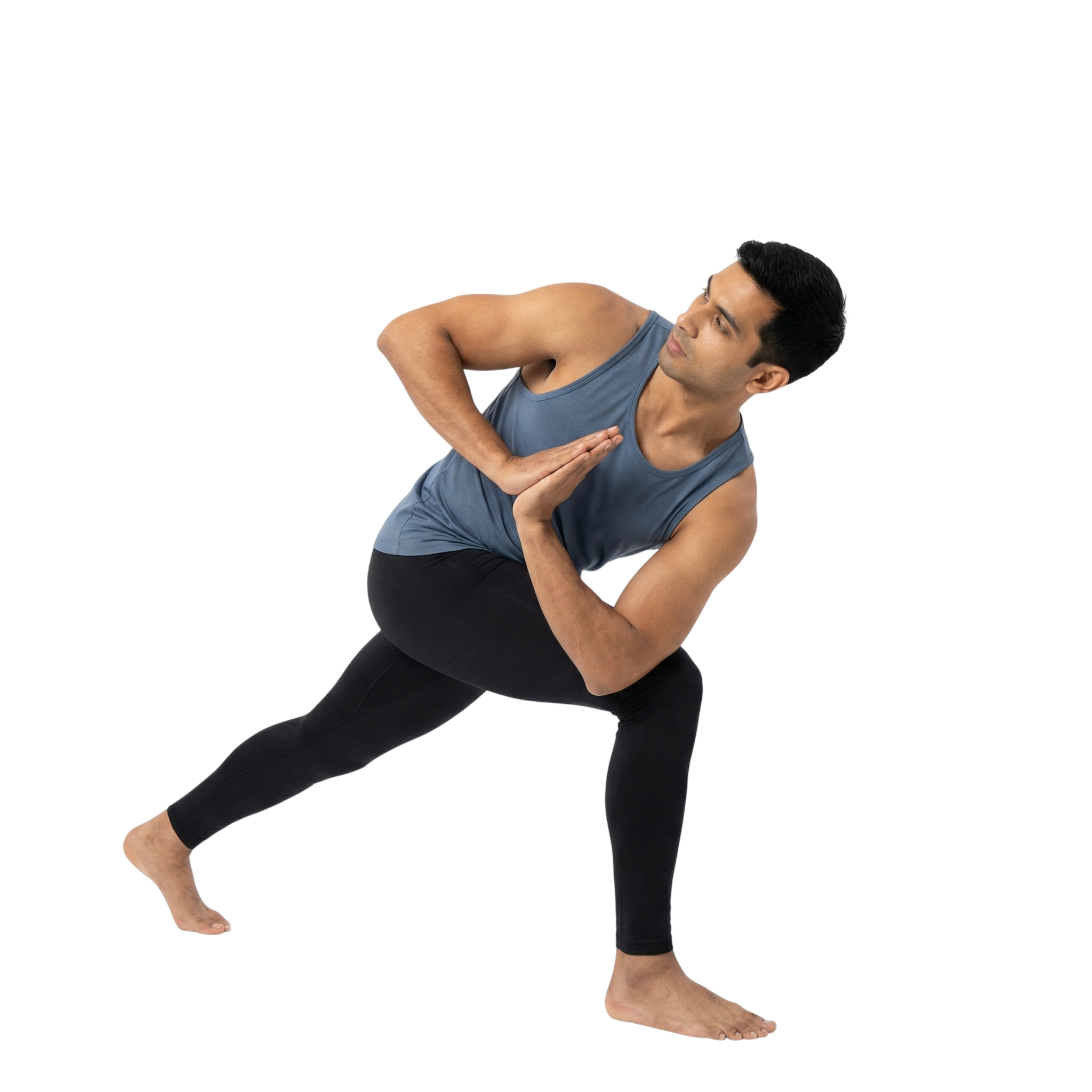
Use repetition-based sequencing: Sun A building progressively, then Sun B with added variations (Open Arm Twist, Exalted Crescent, Revolved Crescent). This structure lets students return to familiar shapes while building complexity.
Key cueing language: "Find a bend in your front knee that you can maintain—where you feel challenged but you still feel strong." "The strongest foundation is the one you can return to time and time again." "Notice how you're showing up differently each time you return to this shape."
Build heat and challenge progressively rather than starting at peak intensity. Give students the same pose multiple times with small variations so they can track how they're responding. First Crescent Lunge is pure hold, second adds Open Arm Twist, third adds Revolved Crescent—same foundation, increasing complexity.
Students often push to their edge on the first round and have nothing left for subsequent rounds. Cue them to back off 10% from their maximum so they can sustain the foundation. Watch for compensations that show up in later rounds—these reveal where the foundation is unstable.
Off the Mat
The same pattern that shows up in your third Crescent Lunge—where you abandon the foundation you established in the first one—appears everywhere you interact with consistency.
At work: You finish one task and immediately jump into the next without any transition. By mid-afternoon, you're completely fried because you've been in sympathetic activation for hours without a single pause to let your nervous system register that one thing ended before the next began. You skip the small, repeatable action of taking three breaths between tasks because it doesn't feel productive enough.
In conversations: You decide to be a better listener, and for the first five minutes of the conversation you're fully present. Then you catch yourself planning your response, thinking about what you need to do later, already halfway out of the interaction. You abandon the small, repeatable action of returning your attention to the present moment because it feels like too much effort to maintain.
With new habits: You commit to a morning practice—meditation, journaling, movement, whatever it is. Day one feels intentional. Day two you're already negotiating with yourself about whether you really need to do it. By day four you've skipped it entirely. You abandon the small, repeatable action because the transformation isn't happening fast enough to feel worth it.
In rest: You know you need to create space for actual downtime, but every time you have a free moment, you fill it. You scroll, you clean, you start another task. You can't maintain the small, repeatable action of just being still because it feels uncomfortable or unproductive.
During transitions: You leave work and bring all the activation home with you. You finish a difficult conversation and immediately distract yourself. You complete a project and start the next one before integrating what you learned. You skip the transition—the small, repeatable action of pausing between one thing and the next—because you're conditioned to keep moving.
This pattern persists because we underestimate what small, repeatable actions can accomplish. We think transformation requires dramatic change, big gestures, complete overhauls. The reality is that little by little, a little becomes a lot. But that requires us to stay with the small action long enough to see it accumulate—and that's uncomfortable when progress feels invisible.
Choose 1-2 scenarios that match your students' context. If you're teaching to a corporate wellness crowd, the work transition example will land. If you're teaching parents, the conversation or rest examples might resonate more. Specificity makes concepts tangible.
Introduce off-mat material during savasana setup or in the final moments of practice when students are integrating. This is when they're receptive to reflection without needing to take action. Avoid bringing it up mid-flow when they need to focus on physical execution.
Keep it invitational. Frame as "you might notice..." not "you should change..." You're planting seeds for recognition, not assigning homework. Students will make their own connections if the examples are specific enough.
Making the Connection
Connecting your experience on the mat to your life off the mat.
"The same pattern that shows up in your third Crescent Lunge—where you abandon the strong foundation you built in the first one—is exactly what happens when you skip the small, consistent actions in your life. You start strong, but you don't maintain it. You think the dramatic effort on day one will carry you through, but it's the small, repeatable action on day three and day seven and day twenty that actually builds capacity. The practice isn't about showing up perfectly every time. It's about returning to the foundation even when it feels boring or insignificant."
"Notice how your body responds differently each time you return to the same pose. That's information. The second Chaturanga reveals something the first one didn't. The third forward fold shows you where you're compensating. Off the mat, the same thing happens—the second conversation about boundaries is different than the first. The third time you pause between tasks, you notice something new. Transformation isn't dramatic. It's the small action, repeated enough times that it becomes your new foundation. Little by little, a little becomes a lot."
Deliver bridge language during transitions between poses or while setting up savasana—moments when students are moving but not actively holding a challenging shape. The language lands when paired with physical experience, not delivered as a standalone lecture.
State it once, clearly, and let it land. Don't repeat or over-explain. Students will connect the dots themselves if the language is specific enough. Some will hear it immediately, others won't integrate it until days later. Trust the process.
One bridge phrase per class is enough. More than that becomes a lecture. You're offering a lens for them to examine their own patterns—you're not teaching a philosophy seminar.
Try This
This week, choose one small action you can repeat consistently. Not a dramatic overhaul—something that takes less than five minutes and can integrate into your existing routine. After you finish a work task, take three full breaths before starting the next one. When you finish a conversation, pause for five seconds before reaching for your phone. Before bed, notice one thing that happened today without judging it as good or bad.
The practice isn't achieving a certain feeling or outcome. The practice is the repetition itself. Pay attention to what happens when you return to the same small action multiple times. Do you abandon it by day three? Do you negotiate with yourself about whether it's worth it? Do you notice something different the fifth time than you did the first time? You might not notice anything at all—and that's fine. The act of returning to the small action is the work.
Frame this as availability, not a requirement. "If you're curious this week, try..." not "You should..." Most students won't do it, and that's genuinely okay. The invitation itself plants the seed—they might not take you up on it this week, but the idea will be there when they're ready for it.
Want to explore strength and repetition through practice? This concept is explored in depth in our latest class episode, where we build progressively through Sun A and Sun B sequences. What small, repeatable actions are you abandoning because they don't feel significant enough? What would change if you stayed with them long enough to see them accumulate?

Related Episode