 Yoga Podclass
Turning Towards Curiosity
You feel your body getting tired, but you push through anyway because you have more to do. You notice tension building in your shoulders, but you ignore it and keep typing. Your body tells you it needs rest, but you override the signal because rest feels like weakness. You spend so much time controlling, performing in, and apologizing for your body that you've stopped listening to what it's actually trying to tell you.
In This Article
- •What curiosity over judgment means — shifting from controlling and criticizing your body to listening to what it's telling you
- •How practice reveals this pattern — poses and moments that show where you're performing instead of witnessing
- •Where you ignore your body's signals — daily life patterns where you override what your body is trying to communicate
- •Language for connecting practice to life — exact phrases for bridging physical listening to off-mat trust
Introduction
Turning toward your body with curiosity instead of judgment is the practice of witnessing rather than criticizing, listening rather than controlling, asking "what is this?" instead of deciding "this is wrong." It's recognizing that your body is always communicating with you—through sensation, breath, tension, ease, discomfort, energy—and that your work is to get quiet enough to hear it.
When you work with this concept, you start to notice where you're performing in your body instead of inhabiting it. You see the places where you're trying to force your body into shapes it's not ready for, pushing past signals because you think you're supposed to, apologizing for taking up space or needing modifications. You recognize the difference between self-study and self-improvement—one is witnessing, the other is fixing.
This isn't about ignoring your goals or abandoning effort. It's not about using "listening to your body" as an excuse to avoid discomfort or never challenge yourself. Turning toward curiosity means you stop deciding ahead of time what your body should be able to do, what it should look like, what story it should tell. Instead, you ask: what is my body communicating right now? What does it actually need? What becomes visible when I witness instead of judge?
On the Mat
This pattern shows up the moment you step onto your mat—the stories you tell yourself about what your body should be able to do versus what it's actually experiencing right now. In your first Downward Dog, you might notice yourself trying to force your heels to the mat because you think that's what the pose is supposed to look like, ignoring the tightness in your hamstrings that's asking for bent knees. In Warrior II, you might push your front knee deeper than your body is ready for because you're performing the pose instead of feeling it.
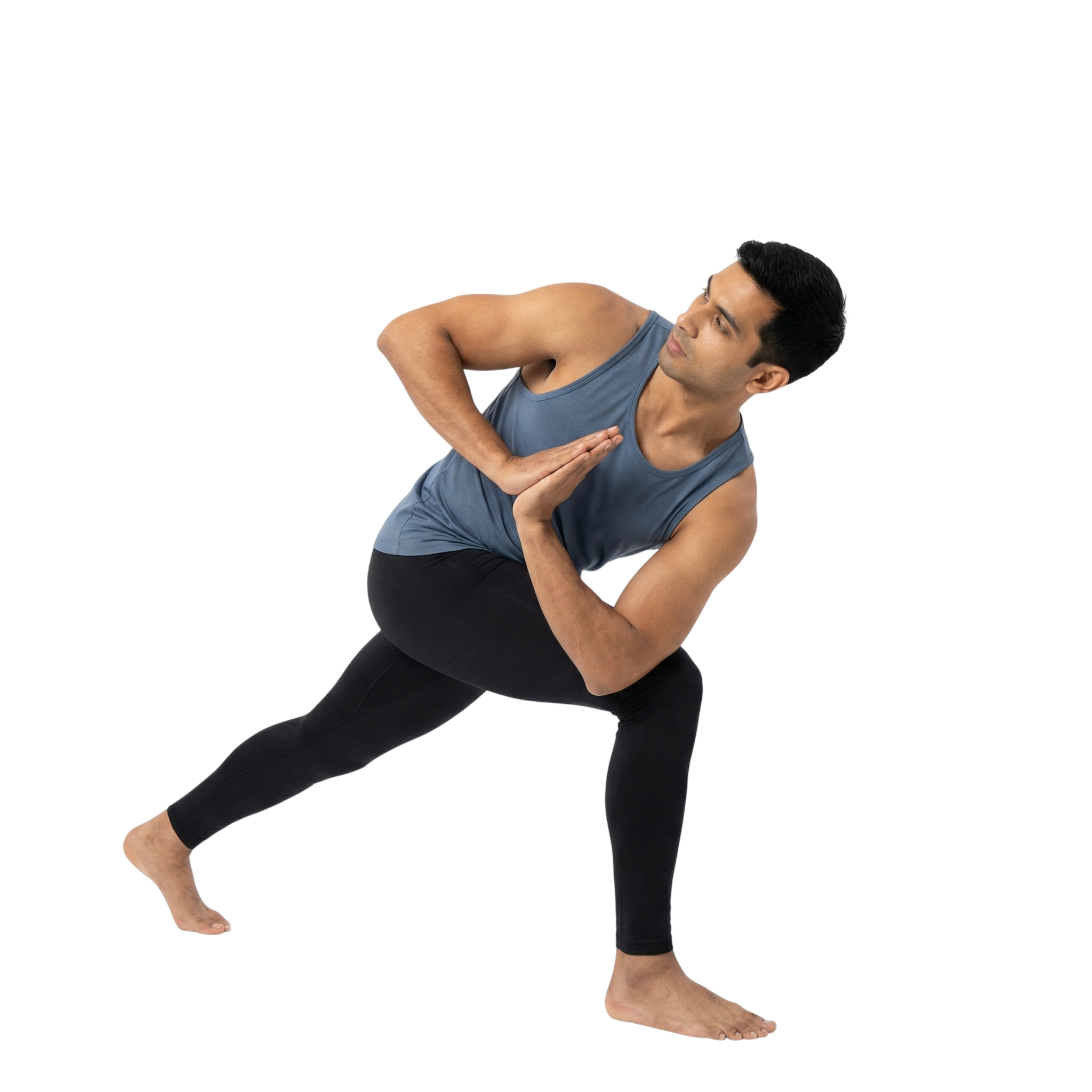
You might notice in Crescent Lunge or Extended Side Angle that you're gripping, bracing, holding your breath—trying to control the experience instead of witnessing it. Your body is communicating through sensation, through breath quality, through where you're compensating, but you're too busy trying to look a certain way to hear it. In seated forward fold, you might be forcing yourself deeper into the shape because you think flexibility is the goal, missing the message your hamstrings are sending about where the actual edge is today.
Working with curiosity means pausing in poses and asking: what is my body telling me right now? Not what do I think it should be able to do, not what could I do yesterday or what I hope to do tomorrow—what is true right now? In Warrior II, that might mean backing off the depth in your front knee to find a place where you can actually breathe. In Runner's Lunge, it might mean noticing that lowering to your forearms creates sensation but not pain, information but not force. The practice shifts from performing poses to witnessing your body's response to them.
Use language that invites curiosity rather than prescribing shape. Instead of "heels should touch the mat in Downdog," try "notice what your hamstrings are telling you—bent knees might give you more information than straight legs." Instead of "deepen your Warrior II," try "find a depth you can maintain while breathing fully."
Key cueing language: "Notice what your body wants to do, not what you think it's supposed to do." "I'm not looking for perfection—I want you to find curiosity, sensation." "What is your body telling you right now?" "Breathe in this moment not to prove anything, but simply to feel something." "What stories does your mind tell you in the discomfort? You decide if it's worth listening to."
Build moments of pause into your sequencing where students can actually listen rather than just move. After the first Downward Dog, after Warrior II, during longer holds in balancing poses—these are opportunities to cue internal awareness rather than external achievement. Ask questions instead of giving commands: "How's it feel today?" rather than "Make it look like this."
Students often perform poses they think you want to see rather than inhabiting what their bodies are actually experiencing. Watch for holding breath, gripping face, forcing depth without stability—these reveal judgment and control rather than curiosity and listening. Cue them back to sensation, back to breath, back to what's actually true right now.

Off the Mat
The same pattern that shows up when you force your heels down in Downward Dog without listening to your hamstrings appears everywhere you override your body's signals in daily life.
At work: Your body tells you it's tired—eyes straining, shoulders creeping up, breath getting shallow—but you override the signal and keep pushing because you have more to do. You've decided productivity matters more than what your body is communicating. By the end of the day you're completely depleted, reactive, running on fumes, wondering why you can't sustain this pace. You ignored every signal your body sent until it forced you to stop.
With rest: You feel exhaustion setting in but you tell yourself you're fine, you can push through, rest is for later. Your body is communicating through heaviness, through difficulty concentrating, through needing more caffeine to function—but you've decided these signals are weaknesses to overcome rather than information to receive. You keep going until you crash, then you're forced into rest because you didn't choose it when your body first asked.
During stress: You notice tension building in your jaw, your shoulders, your chest. Your breath becomes shallow. Your digestion shifts. Your sleep suffers. Your body is sending clear signals that something is off-balance, but you ignore them because acknowledging stress feels like failure or because you don't think you have permission to address it. You wait until the stress manifests as illness or breakdown before you finally listen.
In movement: You push through pain because you think discomfort always means progress. You ignore the difference between sensation and injury, between challenge and harm. Your body sends signals—sharp pain, inflammation, compensation patterns—but you've been taught to override these messages in service of achievement. You keep going until something breaks, then you're forced to stop completely instead of adjusting along the way.
With hunger and fullness: You eat on a schedule regardless of whether your body is actually hungry. You finish your plate even when your body signals fullness. You've learned to distrust your body's communication about what it needs, when it needs it, how much it needs. You follow external rules instead of internal signals, then wonder why eating feels disconnected from actual nourishment.
This pattern persists because you've been taught that your body is the problem—something to control, fix, apologize for, overcome. You've learned to distrust its signals, to see them as weaknesses rather than information. But what if your body isn't the problem? What if it's actually the narrator, constantly communicating what it needs, where it's struggling, what would serve it—and your work is to get quiet enough to hear it? The stories you tell about your body—that it's too much, not enough, broken, wrong—aren't finished. You're the one holding the pen.
Choose 1-2 scenarios that match your students' lived experience. If you're teaching to people in high-stress jobs, the work and stress examples will resonate. If you're teaching to people recovering from injury or navigating chronic conditions, the movement example will land. Specificity helps students recognize their own patterns.
Introduce off-mat material during restorative shapes—Child's Pose, Supta Baddha Konasana, Shavasana setup—when students' nervous systems are settled and receptive to reflection. Avoid bringing it up during active holds when they need attention on physical execution. The integration happens in the softening.
Keep it invitational and witnessing, not prescriptive or fixing. Frame as "you might notice..." not "you need to change..." This work is about recognition first—students will make their own choices about what to do with the information. Some will immediately shift how they relate to their bodies. Others will just start noticing the pattern. Both are valuable.
Making the Connection
Connecting your experience on the mat to your life off the mat.
"On the mat, you practice listening to your body instead of controlling it. You notice what your hamstrings are telling you in forward folds, what your breath communicates in challenging holds, what sensation versus pain feels like in your hips. You learn to witness rather than judge, to ask 'what is this?' instead of deciding 'this is wrong.' Off the mat, your body is still communicating—through tension, through fatigue, through hunger and fullness, through stress responses, through the quality of your breath in daily moments. The practice is the same: get quiet enough to hear it. Stop overriding the signals. Stop deciding ahead of time what your body should be able to handle. Start asking: what is my body actually telling me right now? The stories you've been telling about your body—that it's not enough, that it's the problem, that it can't be trusted—those stories aren't finished. You're the one holding the pen."
Deliver bridge language during transitions into restorative shapes—Child's Pose after standing series, setting up Supta Baddha Konasana, the moments before Shavasana. The language lands when paired with the physical experience of softening and listening, not when students are actively working.
State it once, let it settle. Don't over-explain or repeat. The concept is simple but the integration takes time. Students will carry this with them—some will immediately recognize everywhere they're overriding their body's signals, others will notice it days later when they catch themselves mid-override. Trust the seed you've planted.
One bridge phrase per class is enough. The physical practice has already taught them to listen—the language just names what they experienced. More than that becomes lecture instead of invitation.
Try This
This week, notice one moment when your body sends you a signal—tension, fatigue, hunger, stress, discomfort—and instead of immediately overriding it, pause and listen. You don't have to act on it right away. You don't have to change your entire schedule or completely shift your approach. Just practice the pause between signal and override.
Ask yourself: what is my body actually telling me right now? Not what do I think it should be able to handle, not what I hope it will feel like later—what is true in this moment? That pause—between receiving the signal and deciding whether to honor it—is where curiosity lives. The practice isn't perfect listening or always acting on every signal. The practice is noticing when you're overriding, when you're judging, when you're performing instead of witnessing. That recognition shifts everything.
Frame this as curiosity and recognition, not obligation to change. "If you're curious this week, notice when your body sends a signal and you immediately override it." Most students won't radically shift their relationship with their bodies in a week, and that's genuinely okay. The invitation to notice is itself valuable—it plants awareness that will grow over time.
Want to explore curiosity and self-study through practice? This concept is woven throughout our latest class episode, where we work with the idea that your body isn't the problem—it's the narrator. What stories have you been telling about your body? What signals have you been overriding? What becomes visible when you witness instead of judge?